
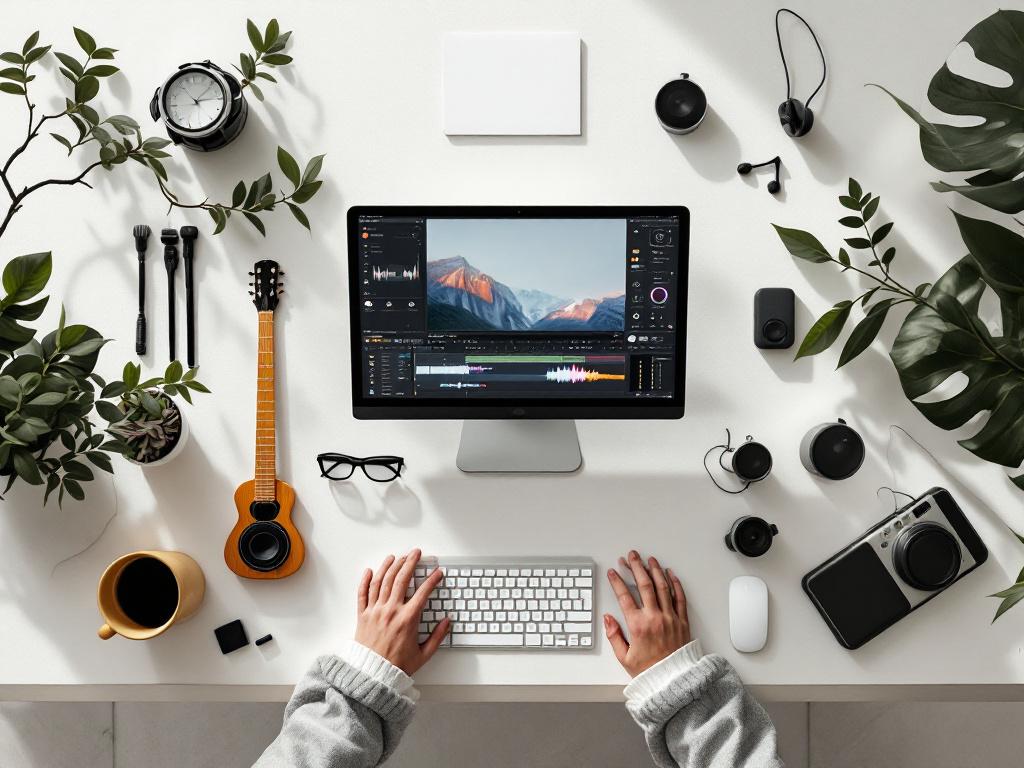
The Evolution of Online Music Video Production: Tools and Trends
In today's fast-paced digital world, music video production tools have become essential components for creators aiming to produce engaging and dynamic content. These tools help in simplifying complex processes such as shooting, editing, effects, and audio integration. With the advent of online music video editing, these trends in video production have undergone a significant transformation, making high-quality video creation accessible to all. This democratization has allowed creators to unleash their creativity without the constraints of traditional methods, thus influencing the way content is consumed today.
The rise in popularity of online editing platforms cannot be overlooked. They bring to the table numerous advantages like cloud access, real-time collaboration, and ease of use, allowing creators to produce polished videos even with limited resources. These platforms are driving the digital era's video trends, empowering creators to enhance their content potential and revolutionize storytelling. Throughout this blog, we will delve deep into the various aspects of music video production tools, unveiling how they serve as the backbone of creative and high-impact music videos. Let’s explore the realm of video creation and understand how these tools can elevate your content.
Understanding Music Video Production
At its core, music video production is the art of visually amplifying music, thereby enhancing the artist's visibility and driving interaction on various social media platforms through synchronized visuals. Music videos have become quintessential in the digital age, providing artists with a creative outlet to express their art and message in a compelling manner. With music video production tools, creators can harness the power of technology to produce high-quality videos, breaking away from the traditional studio setup.
These tools handle intricate tasks like multi-track audio manipulation, video effects integration, and enabling collaboration among artists and technical teams. By harnessing such capabilities, creators are equipped to produce professional-grade music videos that captivate audiences and encourage interaction. The shift to accessible production methods has dismantled barriers, granting way to explore more complex storytelling elements and synchronized visuals that match the rhythm and tone of the music. In essence, music video production stands as a visual extension of musical expression, amplifying emotions and narratives beyond sound.
Moreover, as the digital landscape evolves, these production tools continue to adapt and offer innovative solutions, embracing technological advancements that make professional results achievable without extensive studio setups. This has led to an amplification of creativity, opening doors for artists and creators to engage with audiences on multiple levels. Experimentation has become more viable, encouraging a dynamic and fluid approach to content creation, thereby forming a robust foundation for music video production today.
Essential Music Video Production Tools
To bring musical stories to life, certain essential music video production tools stand out due to their capacity to deliver high-quality results. These tools cater to different aspects of video creation including shooting, editing, and adding effects. They provide features like audio mixing, smooth transitions, and even AI enhancements that are crucial for creating rhythmic and high-impact music content.
One such tool is BandLab, which offers a fully integrated platform with unlimited multi-track recording, mixing capabilities, collaboration support up to 50 users, and free cloud storage. This allows for seamless synchronization of music tracks with video edits, making it ideal for collaborative music projects. Then there's OBS Studio, a free and open-source software for video and audio mixing. It facilitates live music video capture and streaming without any performance lag, perfect for artists seeking to share live performances.
For more intricate edits, platforms like Adobe Premiere Pro and Final Cut Pro X provide robust solutions. Adobe Premiere Pro has the ability to handle various audio and video formats, seamlessly integrate with other Adobe products, and apply professional effects. This is well-suited for creators looking to incorporate motion graphics and achieve striking color correction. Similarly, Final Cut Pro X’s drag-and-drop interface and VR editing empower users to craft dynamic sequences swiftly.
Avid Pro Tools elevates audio mixing with industry-standard precision, ensuring soundscapes match the visual storytelling. For those opting for a more live performance ambiance, Gramrphone offers a free live streaming encoder that captures digital audio workstation (DAW) audio/video without buffering. Finally, Lalal.ai assists in crisp audio-visual syncing by providing AI-driven stem splitting for vocals and instruments.
All these tools do not only serve to produce high-quality outputs but also offer affordability, with many being free, focusing on music-specific workflows, and integrating seamlessly with other creative tools. These production tools are thus pivotal in realizing artists' visions and crafting captivating music videos.
Online Music Video Editing Platforms
With technology advancing, online music video editing platforms have become central to the creative process, highlighting the shift towards more accessible, flexible, and collaborative ways of creating video content. These platforms eliminate the need for hardware-intensive software installation. Instead, they offer cloud-based solutions, which are both cost-effective and easy to access from any device with internet connectivity.
Platforms like InVideo exemplify the best of these features by providing intuitive templates, a vast media library, animations, and team editing functions. This enables users to engage in seamless collaborative projects without being restricted by geographical locations. The inclusion of AI-generated visuals adds an additional layer of creativity and ease, allowing creators to experiment with visuals that naturally complement their music.
Similarly, BandLab transcends traditional editing by enabling browser-based multi-track recording and mastering, emphasizing ease of use while maintaining professional result standards. Kaiber takes this a notch higher by generating music visuals through AI, a feature embraced in the collaboration with artists like Grimes and Boiler Room. Such AI-driven approaches bring fresh and dynamic perspectives to music video production.
Other tools like Spikes Studio help in transforming long videos into shorter social media-friendly clips, which are essential in the age of quick-consumption media. By engaging with these platforms, creators can explore new horizons in video production, curating professional-grade content without being held back by limitations of traditional editing tools.
Overall, online music video editing platforms have revolutionized the production landscape, creating an environment that fosters creativity, collaboration, and innovation. They stand as a testament to how technology can drive inclusivity and democratization in creative industries, allowing anyone with a vision to transform it into a vivid reality.
Trends in Music Video Production
The landscape of music video production is ever-evolving, with new video trends constantly reshaping how content is created and consumed. One of the most notable trends is the integration of AI tools that enable generative videos with complex effects and personalized storytelling elements. Examples include technologies like Sora 2 and Midjourney loops, which facilitate the creation of unique, visually impressive content through AI-driven techniques.
Short-form clips are another emerging trend, resonating well with the digital audience's preference for quick, engaging content. Additionally, music-specific visuals like lyric videos and Spotify Canvas are becoming integral for artists, providing additional layers through which they can express their art. These user-centered visuals cater to the growing demand for visual content that complements music, enhancing the overall listening and viewing experience.
Furthermore, technology is shifting creativity toward automated effects, stem-based editing, and live streaming, which are fostering unique storytelling methods. Platforms like Revid.ai and Invideo AI are at the forefront of this shift, offering automated solutions that leverage AI to enhance creative output. This tech adaptation is aimed at reducing workload while increasing the creative possibilities for artists and creators.
By embracing these trends, content creators can breathe new life into their productions, driving viewer engagement and amplifying reach. A key takeaway here is the ability to remain flexible and adaptable in a fast-paced industry where technology and audience preferences define the rules. As these trends continue to develop, they pave the way for diverse and dynamic content, ultimately reshaping the creative landscape of music videos.
Creating Dynamic Music Content
Crafting dynamic music content is all about captivating audiences through innovative techniques and tools. Central to this is the idea of synchronized cuts to beats, wherein visuals move in harmony with the underlying musical rhythm, creating an immersive experience. By employing AI effects for transitions, creators can seamlessly blend shifts in visuals that resonate with the emotional highs and lows of the music.
Tools like vMix and Spikes Studio come into play here, offering features such as simulcasting and green screen functionalities. These enhance engagement by enabling creators to push the boundaries of interaction with their audiences. Quick shorts, enabled by various plugins and effects, allow for bite-sized, impactful pieces of content that can capture attention rapidly.
Interactivity is another frontier awaiting exploration in dynamic music videos. Techniques such as chromakeying and replays provide layers of depth, inviting viewers to engage actively with content rather than consume passively. These elements create a sense of participation and involvement, transforming the viewing experience into a multifaceted engagement.
Furthermore, AI-driven tools enrich the content by automating materials such as background scores or crowd responses, ensuring that the creator's vision aligns effortlessly with technical capabilities. The environment for creating dynamic music content continues to thrive, empowering creators to experiment freely while ensuring that their output remains captivating and relevant in an ever-competitive media landscape.
Case Studies/Examples
To understand the power of music video production tools in creating dynamic music content, let's delve into some noteworthy case studies and examples. One such example is the music visuals created by Grimes/Boiler Room through Kaiber, where AI-generated effects were layered over tracks to produce viral and immersive music videos. This success wasn't just about technology but the innovative storytelling that captured the audience's imagination.
Another remarkable instance can be found in collaborations taking place on BandLab. Through tasks like high-quality mastering and audio-video synchronization, artists have been able to generate pro-level music videos without high costs. This approach has not only ensured a polished finish but has also contributed to the social virality of videos, enabling artists to expand their reach significantly.
These cases underscore how accessible and versatile tools can lead to high-production-quality outputs that can withstand competitive pressures and appeal to a wide audience. The ability to integrate music and visuals so seamlessly ensures that messages are delivered more powerfully and memorably—fueling social media engagement and artist visibility in today's digital-first world.
Conclusion
In navigating the world of music video production, selecting the right tools is crucial for ensuring impactful and creative video outputs. Platforms like BandLab, OBS Studio, and AI-driven solutions like Kaiber bring a wealth of features that streamline workflows while amplifying creativity. They offer an unparalleled means of curating content that grabs attention, evokes emotion, and pushes cultural conversations forward.
As we've explored, these tools are the backbone of innovation in music video production, supporting the democratization of the creative process and adapting to ever-evolving consumer demands. By harnessing the available trends, tools, and technologies, creators can step into new realms of creativity and bring their visions to life with unparalleled depth and impact.
For content creators, the doors are wide open to explore these technologies and harness their potential for elevating content creation. The best part? You're not alone. Engage with your peers, share your experiences in using these tools, and learn from the community. Growth in this creative journey is collective and transformative.
Call to Action: We invite you to share your experiences with music video production tools. What tools have you found most helpful in creating dynamic content? Let us know your thoughts and suggestions in the comments! Have you tried Online Audio Cutter or Online Video Trimmer? Tell us how these have transformed your editing workflow. Your insights could be the spark that ignites another creator's journey!
FAQ
1. What are the benefits of using AI in music video production?
AI can significantly enhance the creation process by automating complex editing tasks such as scene transitions or effects, thereby reducing production time. It can also generate unique visuals and assist in harmonizing audio elements, effectively elevating the creative potential of a project.
2. How do music video editing tools handle collaboration?
Platforms like BandLab provide robust collaboration features, allowing multiple users to work on a project simultaneously via cloud storage. This enables real-time feedback and adjustments, enhancing synergy in creative processes and allowing for broader collaboration beyond physical boundaries.
3. Are online music video editors as effective as their software counterparts?
Yes, online music video editors offer comparable, if not superior, functionality due to their ease of access and real-time collaboration advantages. They are particularly effective for distributed teams, providing a flexible solution that is scalable according to project needs.
4. Can emerging video trends be applied to traditional production methods?
Absolutely, emerging trends like AI integration, short-form clips, and automation can be blended into traditional filmmaking to enhance viewing experiences. They provide new methods and tools that can revitalize classical approaches with contemporary nuances.
5. How important is audio-visual syncing in music videos?
Audio-visual syncing is crucial as it aligns the visual narrative with the music, ensuring that emotional tones and messaging resound with audiences. Precise syncing can dramatically enhance a viewer's engagement, making it a fundamental aspect of successful music video production.