
Utilizing Online Tools for Creating Virtual Reality Media Content
In recent years, virtual reality content creation has emerged as a transformative process, fundamentally altering how digital experiences are developed. By leveraging powerful tools such as game engines, artificial intelligence (AI), and no-code platforms, creators can build immersive 3D environments that transport users into entirely new worlds. The burgeoning field of virtual reality content creation is not only a testament to technological advancement but also to the changing demands of digital media consumers.
This surge in VR's popularity is undeniable, with projections indicating a significant market growth from USD 15.11 billion in 2026 to an astonishing USD 70.69 billion by 2035. Such rapid growth is driven by various societal shifts, including expanded enterprise adoption, the rise of metaverse platforms, and the increasing accessibility of creation tools for non-technical users. Virtual reality content creation stands at the forefront of this digital movement, offering a comprehensive guide for newcomers and seasoned professionals alike who wish to explore this dynamic space.
Understanding Virtual Reality Content Creation
Virtual reality content is uniquely characterized by its ability to immerse users completely in a digital environment. Unlike traditional media, VR content offers 360-degree views enhanced with spatial audio, and—most importantly—interactivity. These elements create a profound sense of presence, making users feel as though they are truly part of the virtual world they are exploring.
VR content serves various purposes across multiple sectors. Common examples include immersive training simulations tailored for medical professionals like surgeons or factory workers needing to hone their skills without risks. Additionally, VR's application in virtual prototyping provides architects and automotive designers with interactive 3D models to test and iterate in virtual spaces. There's also a growing interest in social VR experiences, which offer persistent virtual worlds where users can interact, learn and engage in activities together without geographic limitations. Furthermore, enterprise tools such as interactive 3D whiteboards facilitate remote collaboration, enhancing productivity and creativity among teams.
The demand for virtual reality content creation stems from an increasing desire for high-quality, personalized digital experiences. This trend is apparent across sectors like healthcare, where sophisticated VR training modules are proving to be invaluable. In the entertainment industry, customization options in video content have risen by 5% year-over-year. These demands align with the forecasted growth of the immersive market, expected to reach USD 67.63 billion by 2030, with a compound annual growth rate (CAGR) of 26.5%. As more industries recognize the potential of VR, the need for expertly crafted content continues to expand.
Key VR Media Tools
Creating captivating VR content requires a combination of robust software and advanced hardware. Among the most pivotal software tools are Unity and Unreal Engine, which have tailored their platforms for VR through no-code and low-code suites. These features democratize access to content creation, enabling individuals without extensive programming knowledge to construct complex virtual environments. Moreover, these engines support AI integrations that automate 3D model generation, transforming simple sketches into detailed digital models.
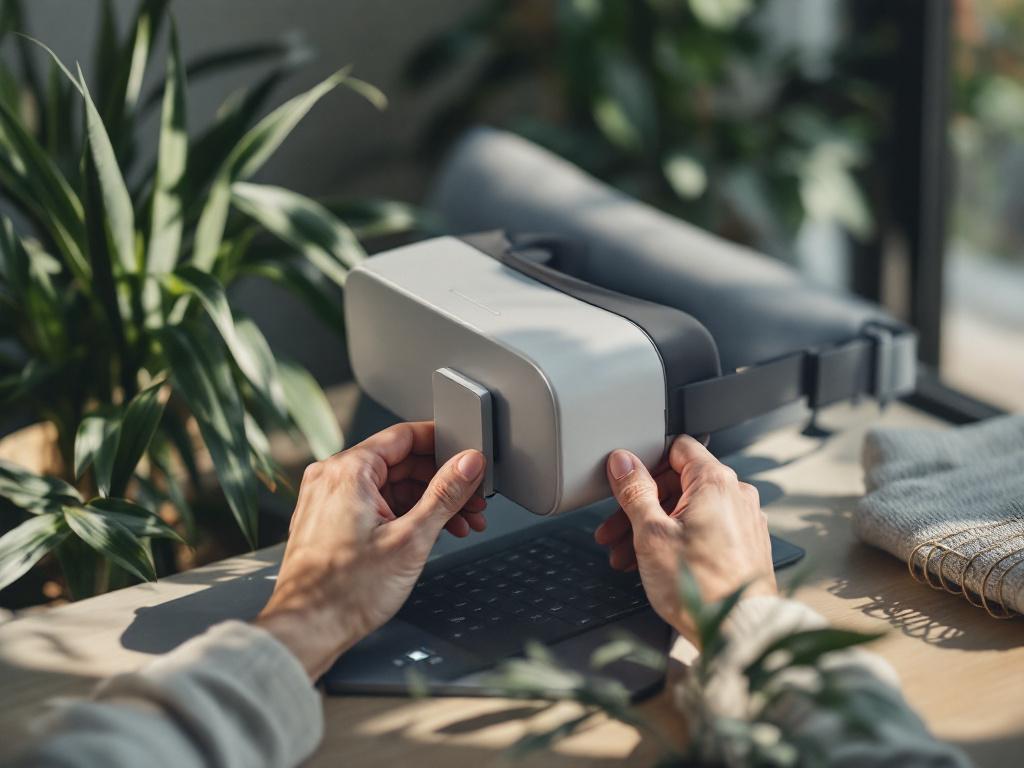
On the hardware front, standalone VR headsets like the anticipated Quest 4 play a crucial role. These devices offer high-resolution displays, eye and body tracking, and motion capture capabilities that enhance the immersive experience by enabling photorealistic visuals. Companies like Sony are also innovating XR head-mounted displays designed for professional 3D creation, further broadening the scope of VR media tools available to creators.
Foveated rendering is another essential technique these tools support. By concentrating processing power only in the areas where the user is looking, it significantly boosts mobile VR performance without compromising on image quality. The interplay between these VR media tools serves to democratize content creation, ensuring that even those devoid of technical expertise can contribute to the immersive media landscape. By bridging technical gaps, these tools unlock creative potential, allowing more voices and visions to participate in the burgeoning world of VR.
Immersive Media Production Techniques
The heart of effective virtual reality content lies in its production techniques, which emphasize capturing the essence of real-world interaction within digital spaces. Fundamental techniques include 360-degree capture, which provides viewers with a full field of vision, and spatial mapping, which ensures elements within the VR environment respond naturally to user movements.
Real-time interactivity is another cornerstone of immersive media production, facilitating user-driven narratives that can change the story's course based on decisions made by participants. This interactive storytelling is often supported by procedural AI, generating dynamic worlds that evolve in response to user actions, creating a truly personalized experience.
Yet, creating VR content is not without its challenges. Hardware constraints, particularly with standalone devices, necessitate efficient asset pipelines that manage resources without detracting from the quality of the experience. Developers must deftly balance photorealism with performance to ensure smooth and engaging interactions. Moreover, with a plethora of competing platforms and devices, cross-platform compatibility remains a critical consideration to maximize reach and functionality.
Storytelling and interactivity play crucial roles in elevating the VR experience beyond passive consumption. They engage users by placing them at the center of narratives, further enhancing engagement through social interaction within user-generated content (UGC) and persistent metaverses. By integrating these techniques, creators can surpass the limitations of linear media, providing experiences that are as unpredictable as they are engaging.
Online VR Tools for Content Creators
The advent of online platforms has revolutionized VR content creation, empowering creators to work collaboratively in cloud-based environments. These tools offer a plethora of benefits, notably scalability, which is especially advantageous for teams dispersed across various locations. Integration with CAD and BIM workflows further streamlines the development process, while no-code interfaces drastically reduce development time.
Platforms like Mazer Trainer exemplify the efficiency of online VR tools, enabling the creation of safety training modules in a matter of days rather than weeks. These platforms not only facilitate content creation but also support real-time collaborative editing, asset sharing, and seamless distribution.
Furthermore, specific tools are designed for more focused applications, like metaverse building or AI-assisted generators for 3D asset creation. These platforms empower creators to monetize their work within social VR ecosystems by offering premium packs or custom-designed worlds. As these online VR tools become more sophisticated, they lower the barriers to entry for budding creators and established professionals alike.
By leveraging these platforms, creators can focus on the creative aspects of their projects, knowing the technical side is supported by robust, user-friendly tools. This not only enhances productivity but also encourages further innovation in the rapidly evolving landscape of virtual reality content creation.
The Future of Virtual Reality Content Creation
As we look to the horizon, numerous trends are set to shape the future landscape of virtual reality content creation. AI continues to be a significant driver, enabling dynamic environments that personalize user experiences based on interaction patterns. The rise of no-code platforms also plays a central role, democratizing content creation by allowing a broader range of talents to partake in VR development without encountering technical hurdles.
Photorealistic rendering is another promising development, heightened by advancements in GPU technology. The shift toward standalone and mobile VR solutions is evident, with stylized optimization techniques enabling more immersive experiences on less powerful devices. Such advancements align with the broader trend of XR convergence, merging VR, AR, and MR (mixed reality) into cohesive experiences that can transform various sectors.
Lighter headsets and the integration of brain-computer interfaces represent the cutting edge of VR technology, offering new levels of interactivity and immersion. These developments indicate a future where virtual reality is not merely a tool for entertainment but a utilitarian platform used in work, education, and social connection. This evolution will likely foster a thriving creator economy within interconnected metaverses, driving further innovation and growth.
As these trends unfold, virtual reality content creation will continue to push boundaries, offering creators unprecedented opportunities for expression and engagement. By staying informed of emerging technologies and techniques, creators can ensure they are well-equipped to capitalize on the exciting possibilities that lie ahead.
Conclusion
Over the course of this exploration, we have delved into the essential components that comprise the field of virtual reality content creation. From understanding the fundamental differences between VR and traditional media to recognizing the significance of mastering tools like Unity and advanced standalone headsets, the journey through VR content creation is both complex and rewarding.
By embracing immersive media production techniques such as real-time interactivity and cross-platform compatibility, creators can elevate their projects to new heights, providing users with experiences that are engaging, dynamic, and personal.
The future of virtual reality content creation is bright, with innovations in AI, no-code platforms, and rendering technologies shaping the market's rapid expansion. As we advance, mastery of VR media tools and an understanding of production techniques becomes vital, not just for thriving but for leading in this innovative field.
Call to Action
Now is the time to dive into the world of virtual reality content creation. Start by experimenting with no-code VR platforms and AI tools that make the creative process more accessible. Engage with online VR creator communities to collaborate, share ideas, and develop skills in immersive media production. For those looking to refine their content further, explore tools like our Online Audio Cutter and Online Video Trimmer, which offer precise media editing solutions to enhance your virtual reality projects.
As virtual reality continues to shape the future of digital interaction, there's no better moment to begin your journey in creating the experiences of tomorrow.